Featured

Plants vs. Formaldehyde

One of the most prevalent chemicals in your home air and how your plants are saving you from it.

By: Sydney Varn

This is a review, summary and discussion of the article- “Phytoremediation of Formaldehyde from Indoor Environment by Ornamental Plants: An Approach to Promote Occupants Health” by authors- Hakimeh Teiri, Hamidreza Pourzamzni, and Yaghoub Hajizadeh.

Citation: Teiri, H., Pourzamzni, H., & Hajizadeh, Y. (2018). Phytoremediation of Formaldehyde from Indoor Environment by Ornamental Plants: An Approach to Promote Occupants Health. International journal of preventive medicine9, 70. doi:10.4103/ijpvm.IJPVM_269_16

I want to start my first post off with an interesting topic most people can connect with. Whether you have breathing/heath issues, are a plant enthusiast, or just want to make your home feel cozy you’ve probably been exposed to the “air purifier” plants on the Walmart shelf promising of less polluted breaths. Most people, however, are not familiar with the biology and chemistry of plants but would still like to know how they are improving their health or not with their favorite plants. The article I will be reviewing will explain how these plants remove one of the most common VOC’s (volatile organic compound), formaldehyde. Don’t worry if you are unfamiliar with the words I will do my best to help!

  • Phytoremediation- Plants removing contaminates from the environment (water, earth, air)
  • Formaldehyde- An organic compound with the formula CH2O. Also known as Methanal and is a colorless, flammable, hazardous carcinogenic gas found in a multitude of daily household items.
  • The breakdown process- oxidation and absorption. What this means is that when a plant absorbs formaldehyde it is broken down two ways- through the notorious Calvin cycle (where plants turn carbon dioxide into glucose) where it is turn into carbon dioxide, and absorption for later use by the organism.
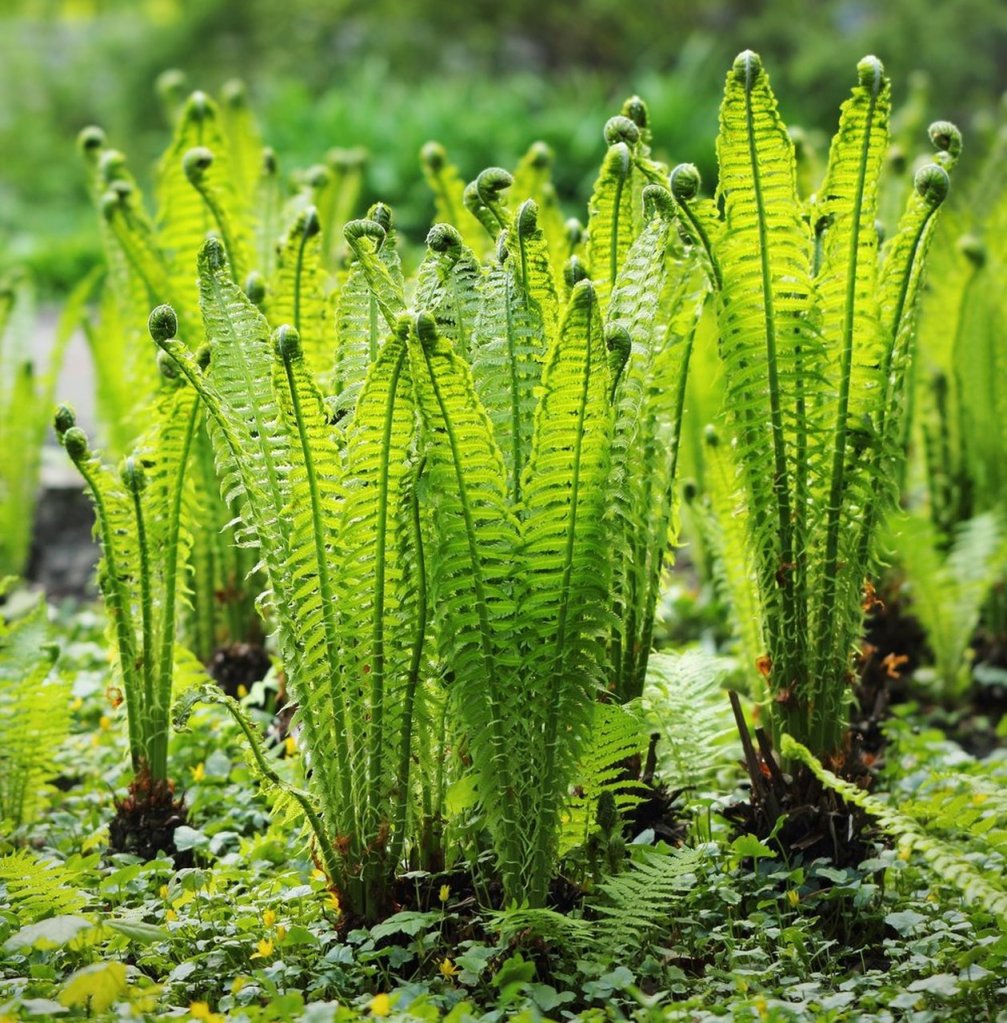
Hakimeh Teiri, Hamidreza Pourzamzni, and Yaghoub Hajizadeh decided to set up their experiment by putting a fern (specifically- Nephrolepis obliterata) inside an air tight plexi-glass chamber containing an inlet, an outlet and two fans for air circulation. Here they exposed the fern to varying levels of formaldehyde gas for various time periods in different humidity and light intensity.

They had to first use tests to detect leaks in the chambers by introducing formaldehyde into the chambers without the plant for 6 days and monitoring the concentration. Next, two plants of about the same size are placed into two different chambers of 40% and 80% relative humidity where they were continuously exposed to formaldehyde concentrations ranging from 0.5-12.0 mg/m3 (milligram per cubic meter) for two days. They gave the plants a day to rest between the tests. The formaldehyde concentration was determined using a visible absorption spectrometry technique (how substances absorb wavelengths). The darkness test was conducted to determine the efficiency of filtration in different light intensities.

The results- it works!!! Using multiple complicated equations (listed in actual article) it was found that the ferns removed 90-100% of formaldehyde from the polluted air at concentrations up to 9.73mg/m3 . Though, the plants were not able to withstand higher concentrations as their efficiency to absorb decreased.

Not only did they discover that ferns are phytoremediators, but other common plants such as the spider plant and Aloe Vera plant have also been proven to work.

***I do not own any data, results, conclusions or experimental design stated in this post pertaining to the article cited above.


Plants vs. Formaldehyde

One of the most prevalent chemicals in your home air and how your plants are saving you from it.

By: Sydney Varn

This is a review, summary and discussion of the article- “Phytoremediation of Formaldehyde from Indoor Environment by Ornamental Plants: An Approach to Promote Occupants Health” by authors- Hakimeh Teiri, Hamidreza Pourzamzni, and Yaghoub Hajizadeh.

Citation: Teiri, H., Pourzamzni, H., & Hajizadeh, Y. (2018). Phytoremediation of Formaldehyde from Indoor Environment by Ornamental Plants: An Approach to Promote Occupants Health. International journal of preventive medicine9, 70. doi:10.4103/ijpvm.IJPVM_269_16

I want to start my first post off with an interesting topic most people can connect with. Whether you have breathing/heath issues, are a plant enthusiast, or just want to make your home feel cozy you’ve probably been exposed to the “air purifier” plants on the Walmart shelf promising of less polluted breaths. Most people, however, are not familiar with the biology and chemistry of plants but would still like to know how they are improving their health or not with their favorite plants. The article I will be reviewing will explain how these plants remove one of the most common VOC’s (volatile organic compound), formaldehyde. Don’t worry if you are unfamiliar with the words I will do my best to help!

  • Phytoremediation- Plants removing contaminates from the environment (water, earth, air)
  • Formaldehyde- An organic compound with the formula CH2O. Also known as Methanal and is a colorless, flammable, hazardous carcinogenic gas found in a multitude of daily household items.
  • The breakdown process- oxidation and absorption. What this means is that when a plant absorbs formaldehyde it is broken down two ways- through the notorious Calvin cycle (where plants turn carbon dioxide into glucose) where it is turn into carbon dioxide, and absorption for later use by the organism.

Hakimeh Teiri, Hamidreza Pourzamzni, and Yaghoub Hajizadeh decided to set up their experiment by putting a fern (specifically- Nephrolepis obliterata) inside an air tight plexi-glass chamber containing an inlet, an outlet and two fans for air circulation. Here they exposed the fern to varying levels of formaldehyde gas for various time periods in different humidity and light intensity.

They had to first use tests to detect leaks in the chambers by introducing formaldehyde into the chambers without the plant for 6 days and monitoring the concentration. Next, two plants of about the same size are placed into two different chambers of 40% and 80% relative humidity where they were continuously exposed to formaldehyde concentrations ranging from 0.5-12.0 mg/m3 (milligram per cubic meter) for two days. They gave the plants a day to rest between the tests. The formaldehyde concentration was determined using a visible absorption spectrometry technique (how substances absorb wavelengths). The darkness test was conducted to determine the efficiency of filtration in different light intensities.

The results- it works!!! Using multiple complicated equations (listed in actual article) it was found that the ferns removed 90-100% of formaldehyde from the polluted air at concentrations up to 9.73mg/m3 . Though, the plants were not able to withstand higher concentrations as their efficiency to absorb decreased.

Not only did they discover that ferns are phytoremediators, but other common plants such as the spider plant and Aloe Vera plant have also been proven to work.

***I do not own any data, results, conclusions or experimental design stated in this post pertaining to the article cited above.


Design a site like this with WordPress.com
Get started